

Scott Kirby's American Airlines Blueprint: How His Past Paves the Way for United's Next Era
What Scott Kirby's Airline "Hunger Games" Really Means for Your Portfolio
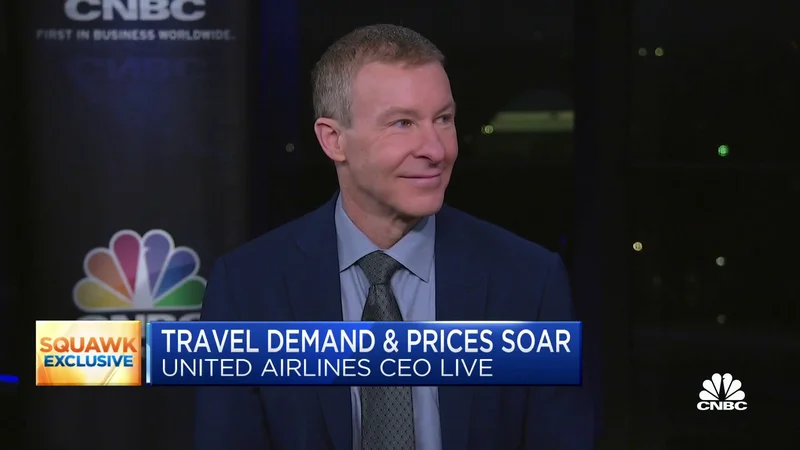
Scott Kirby, the CEO of United Airlines, isn’t known for mincing words. On November 21, 2025, he delivered a verbal broadside against the entire U.S. airline industry, effectively drawing a line in the sand and declaring a competitive "hunger games" for market dominance. These pronouncements, detailed in Scott Kirby American Airlines Remarks Shake Industry as United CEO Issues Bold Warning - Meyka, weren't just casual observations; they were a meticulously crafted narrative designed to reframe the entire sector, and for anyone holding airline stock, ignoring them would be a significant oversight. Kirby's thesis is stark: the future, he argues, has room for only two truly dominant, full-service carriers, "large, revenue-diverse, full-service, brand-loyal." The rest? Competing for scraps, or, in the case of ultra-low-cost carriers (ULCCs), heading for the scrap heap.
This isn't just corporate bluster. It’s a strategic positioning, backed by what United claims is hard data. Kirby specifically singled out American Airlines, painting it as a carrier adrift—lacking clear strategy, suffering from weak employee engagement, and losing competitive relevance. He even put a number on it, citing United's internal (or at least publicly referenced) data that suggests American Airlines is reportedly hemorrhaging approximately US$800 million annually on its Chicago O’Hare network alone. Now, the methodology behind that specific figure isn't entirely transparent (is it pure operating loss, or does it factor in opportunity cost and network effects?), but the implication is clear: a major hub, for a supposed "big three" player, is allegedly a significant drain. American's CEO, Robert Isom, predictably dismissed the remarks, claiming they don't influence their business decisions. That's the expected public stance, of course, but privately, these numbers, if accurate, have to sting.
The Reckoning for American and the ULCC "Experiment"
Kirby’s narrative goes beyond just American; he declared the ultra-low-cost carrier model a "failed experiment," predicting a shake-out. His reasoning? The model "screws the customer." This isn't just a moral judgment; it's a financial one. In a market strained by rising fuel and labor costs, the razor-thin margins of ULCCs become unsustainable. My analysis suggests that while the initial appeal of rock-bottom fares was undeniable, the long-term customer satisfaction metrics (and thus, repeat business and loyalty) for many of these carriers have never quite materialized into the kind of sustainable, diversified revenue streams that legacy carriers like United are now chasing. When you consistently nickel-and-dime travelers for everything from carry-on bags to seat assignments, you might win on price, but you lose on loyalty—a crucial metric in a mature market.
This dismissal of the ULCC model signifies a broader pivot within the industry. It’s a strategic move away from a race to the bottom on fares towards an emphasis on loyalty, quality, and diversified revenue streams, particularly premium cabins and global hub strength. For a former hedge fund analyst like myself, this shift isn't surprising. The market has always rewarded companies that can differentiate beyond just price, especially in a sector with high fixed costs and significant barriers to entry. The question, then, isn't if the ULCC model will face pressure, but when the dominos start to fall, and which players are truly vulnerable. I’ve looked at hundreds of these market projections, and this particular declaration from Kirby feels less like a forecast and more like a tactical opening salvo in a high-stakes poker game for market share.
The Inevitable Calculation
So, what does this mean for the future airline landscape? Kirby's prediction of two dominant airlines suggests an industry ripe for consolidation. If United and Delta are the presumptive two, that leaves American Airlines in a precarious position. The challenge for American isn't just to respond to Kirby's rhetoric; it's to define a clear, sustainable path forward. This means focusing on premium service, strengthening global partnerships, shoring up its loyalty program, and, critically, improving employee morale and operational reliability. Kirby wasn't subtle when he stated, "Once you lose labour, it’s over." This isn't just about union negotiations; it's about the fundamental human capital that drives customer experience and operational efficiency.
The industry is clearly at an inflection point. The mixed reactions from industry watchers—some applauding Kirby's clarity, others decrying his arrogance—only underscore the high-stakes nature of these pronouncements. Kirby is playing a very specific game here, aiming to influence investor perceptions, competitor strategies, and even internal labor relations. His aggressive stance carries risks for United, of course, including potential regulatory scrutiny or a backfire if market dynamics shift unexpectedly. But for American Airlines, the immediate task is to demonstrate that it isn't just competing for "spill traffic," and that its hubs, particularly Chicago O’Hare, are not the financial black holes Kirby suggests. The numbers, eventually, will tell the true story.
The Math of Market Dominance Just Got Real
Kirby isn't just predicting the future; he's actively trying to engineer it. His remarks aren't just an opinion; they're a calculated attempt to signal United's perceived competitive advantage and to functionally re-rate the entire sector. If you believe the underlying data, the market is heading for a brutal culling, and American Airlines, despite its legacy status, is directly in the crosshairs. The question for investors isn't whether Kirby is right, but whether American can prove him wrong before the music stops.

Related Articles
- 热门文章
-
- 1Corteva Announces Corporate Split: The Rationale, Market Impact, and What the Data Shows
- 2Jerome Powell's Latest Speech: Translating the Latest Fed-Speak
- 3B&M's Harvest Mug Recall: Why Your Cheap Mug Might Explode
- 4The U.S. Forest Service Overhaul: Analyzing the Data Behind Recent Closures and Policy Shifts
- 5Gold Surpasses $4,000: What Today's Spot Price Per Ounce Really Means
- 6Royal Caribbean Norovirus Outbreak: What the Data Reveals About the Symptoms and Scale
- 7PepsiCo's Q3 Earnings Beat: Deconstructing the Ozempic Narrative and Activist Pressure
- 8Juan Gabriel: The 'Alive' Conspiracy and His Unforgettable Legacy
- 9Plasma: What It Is and the Economics of Donation
- 10The TransUnion Data Breach: What It Reveals About Our System & The Steps You Must Take Now
- 热评文章
-
- 1B&M's Harvest Mug Recall: Why Your Cheap Mug Might Explode
- 2The Zcash Awakening: Why This Surge Signals a New Era for Privacy
- 3HMRC's New Pension Lump Sum Rules: What Changed and Why It's Another Bureaucratic Headache
- 4Yom Kippur: What It Is, Why You Fast, and If It Even Matters Anymore
- 5The Search Term 'Canyon': Dissecting Search Intent for National Parks vs. Trucks vs. Universities
- 6Royal Caribbean Norovirus Outbreak: What the Data Reveals About the Symptoms and Scale
- 7Juan Gabriel: The 'Alive' Conspiracy and His Unforgettable Legacy
- 8Plasma: What It Is and the Economics of Donation
- 9The U.S. Forest Service Overhaul: Analyzing the Data Behind Recent Closures and Policy Shifts
- 10The TransUnion Data Breach: What It Reveals About Our System & The Steps You Must Take Now
- 随机文章
-
- Royal Caribbean Norovirus Outbreak: What the Data Reveals About the Symptoms and Scale
- Aster's $64B Breakthrough: Decoding the October Forecast and the Future of Smart Investing
- The U.S. Forest Service: What It's Supposed to Do vs. The Mess It Actually Is
- Zcash Price Surge: What Is Zcash, Its Price Prediction, and How It Stacks Up vs. Monero
- Solana's Price: The Latest Predictions and What Comes Next
- EVAA Protocol: Deconstructing the Tokenomics and Post-Launch Trajectory
- PLUG Stock's Sudden Pop: What's Really Driving the Hype and If It's a Trap
- AMD's Stock Price: What Today's Price Reveals About Its Future vs. Nvidia
- Hims Stock: Decoding the Recent News and Price Action
- Nvidia's CEO Jensen Huang: What's Really Going On With the Stock
- 侧栏广告位
-